Schedule consultation

a

EduWW Tutors Answer Your FAQ

“Education should adapt to the student — not the other way around. Families often ask similar questions when considering onli ne education.Below, EduWW tutors share their professional experience and firsthand insights, offering thoughtful answers shaped by daily work with students across different ages, backgrounds, and learning styles What is the most striking difference between online … Read more
a

Evaluating Educational Interventions: The Role of Randomized Controlled Trials in Online Learning

Online learning is full of promising ideas: new platforms, tutoring tools, adaptive practice, virtual coaching, AI tutors, redesigned courses. The hard part is separating what sounds effective from what reliably improves learning. Randomized Controlled Trials (RCTs) are one of the strongest ways to test whether an online intervention causes better outcomes, not just correlates with them. What an RCT actually … Read more

a

Navigating Neurodevelopment: Mitigating Stress to Boost Academic Success

Students face numerous challenges that impact both their mental well-being and academic performance. Neurodevelopment, the brain’s growth and maturation, plays a critical role in learning, memory, and emotional regulation. Stress, particularly chronic stress, can interfere with these processes, impairing cognitive functions and academic outcomes. However, strategic stress management techniques can help students optimize brain development … Read more

a

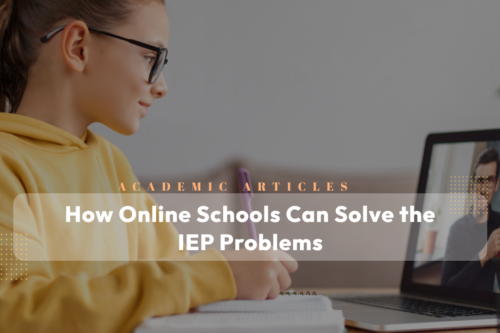
How Online Schools Can Solve the IEP Problems

While Individual Education Programs (IEPs) are designed to support students with learning differences, the traditional school setting often struggles to provide accommodations effectively or consistently. That’s why an increasing number of parents are turning to affordable private online schools as an alternative, especially for students whose needs are more about flexibility and personalized learning than … Read more

Student Clubs

Student Life and Clubs

Education World Wide realizes the importance of socialization for children. Even though online schooling is often criticized for lack of socializing, we are trying to bridge that gap. One of the ways we do that is through extracurricular activities that allow students to share mutual interests and passion or have hobbies through school clubs. Education World … Read more

a

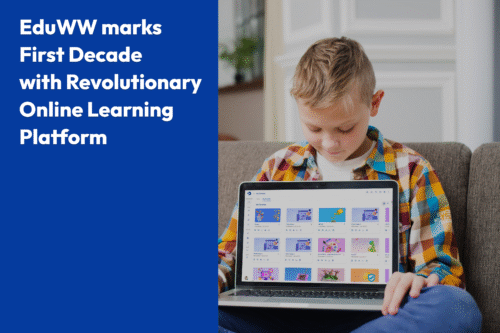
EduWW marks First Decade with Revolutionary LMS

We are celebrating a decade of EduWW! We grew with our students and their families from a humble start to the international community we are today. As we look back to see what we achieved, we’re delighted to announce the launch of our own, next-generation K-12 learning platform.  The new tool, a cutting-edge LMS, is … Read more

The Role of Dopamine in Student Motivation (Neuroscience Insights + Practical Strategies)

Dopamine, a neurotransmitter often associated with motivation and goal-directed behavior, plays a key role in how students engage with learning. When students anticipate progress, feedback, or meaningful rewards, dopamine activity increases, reinforcing behaviors linked to positive learning outcomes. This neurological mechanism is particularly relevant in today’s online K-12 classrooms, where digital tools and gamified elements … Read more

a

Cognitive Flexibility Through Multilingualism: Insights into Bilingual Brain Development in Online Education

Learning more than one language does more than expand a child’s vocabulary. It actively shapes how the brain develops, adapts, and processes information. These cognitive changes are especially important in modern learning environments, where students are expected to switch between tasks, manage complex information, and remain flexible in how they think. From infancy through early … Read more

a

Social and Emotional Learning in Online Education: Adapting SEL to Digital Classrooms

Virtual classrooms offer flexibility and expanded access to education, but they also change the way of students’ experience in social interaction and emotional support. The absence of consistent face-to-face contact, reduced non-verbal cues, and increased reliance on self-directed learning can limit opportunities for social connection which can play a critical role in students’ emotional and … Read more

Assistive Technologies for K-12 Online Learners: Empowering Students with Disabilities in Digital Education

Virtual classrooms offer flexibility, personalized pacing, and expanded access. However, for students with disabilities, digital learning environments can either remove barriers or unintentionally create new ones. The difference lies in how well these environments are designed to support diverse learning needs. Assistive technologies can significantly help in ensuring that online education is accessible by to … Read more

a

Conceptual Change in Online K-12 Learning: Strategies to Overcome Student Misconceptions

Learning isn’t simply about adding new facts. It often requires a restructuring of existing ideas. In education, students frequently hold misconceptions, inaccurate or incomplete understandings of certain concepts that get in the way of deeper learning and future success. True learning happens when these misconceptions are identified, challenged, and replaced with scientifically correct concepts. In … Read more

a

Executive Functions in Virtual Classrooms: The Prefrontal Cortex at Play

Learning is not only about acquiring information. It also requires a set of cognitive processes that allow students to organize tasks, manage attention, resist distractions, and adapt to new challenges. These abilities are known as executive functions, and they play a central role in academic success, especially in learning environments that require autonomy, such as … Read more

Schedule a consultation

Contact Us